


Breakdowns in bulk cement transport cost time, money, and trust. One missed delivery affects your client’s schedule and puts pressure on your entire operation. Most of these issues do not start on the road. They start with poor maintenance routines.
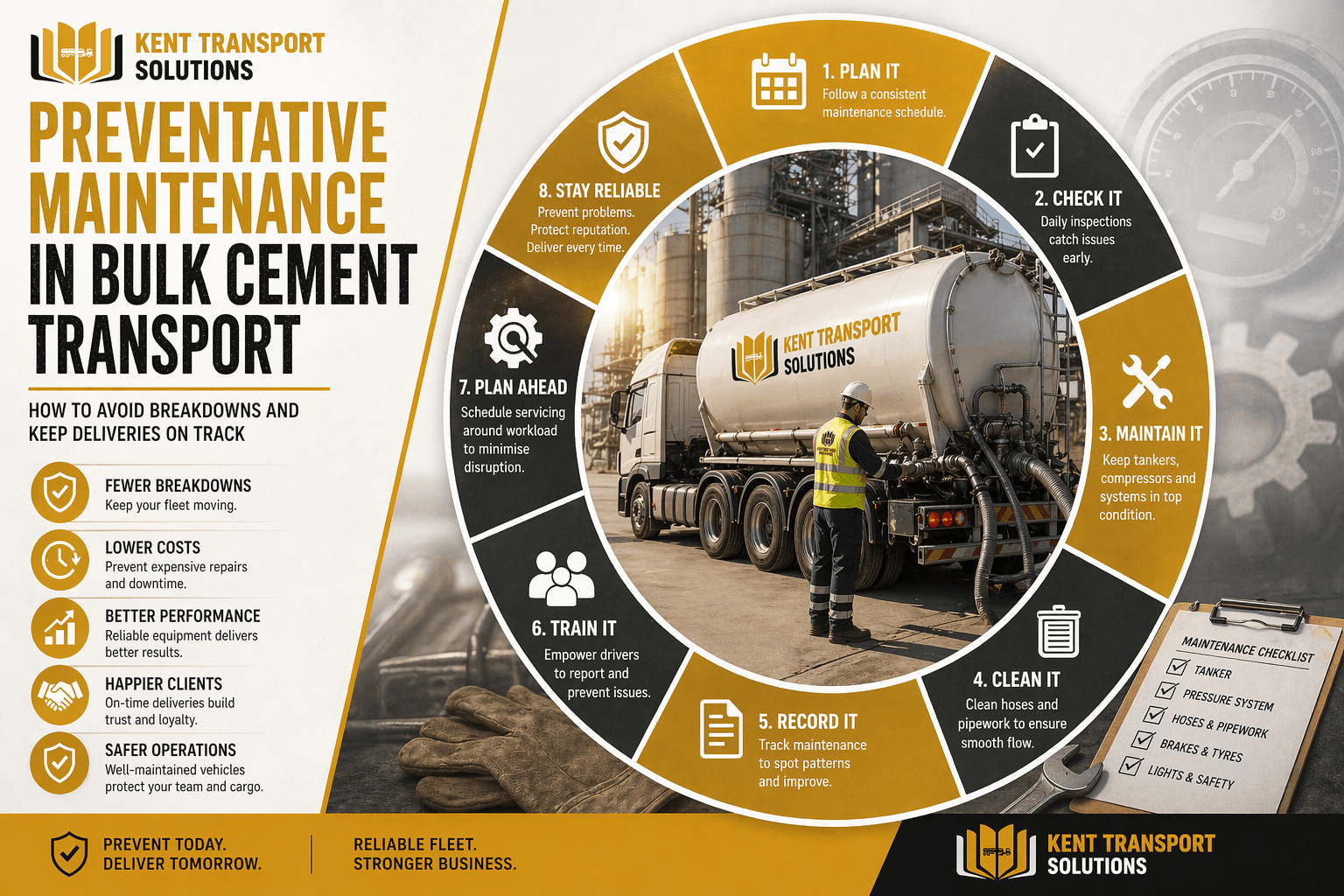
If you want reliable performance, you need a structured approach to preventative maintenance. This keeps your fleet moving, reduces unexpected repairs, and protects your reputation.
Here is how you keep your vehicles and equipment in top condition.
Build a Consistent Maintenance Schedule
Maintenance should never depend on guesswork. You need a clear schedule that your team follows without exception.
Set intervals based on:
- Mileage
- Operating hours
- Manufacturer guidelines
- Type of work carried out
Include daily checks, weekly inspections, and planned servicing. When you follow a routine, you reduce the risk of sudden failures.
Carry Out Daily Vehicle Checks
Small faults often become major problems when ignored. Daily checks help you catch issues early.
Drivers should inspect:
- Tyres for wear and correct pressure
- Lights and indicators
- Brakes and steering response
- Tanker seals and valves
- Hoses and connections
These checks take minutes but prevent hours of downtime.
Focus on Tanker Integrity
The tanker carries your product and protects its quality. Any fault here affects both safety and service delivery.
Inspect regularly for:
- Cracks or damage to the tank body
- Worn seals that lead to leaks or contamination
- Blockages in discharge systems
- Faulty pressure valves
Keeping the tanker in good condition ensures smooth loading and discharge every time.
Maintain Pressure and Compressor Systems
Bulk cement transport depends on reliable pressure systems. If these fail, discharge becomes slow or unsafe.
You need to:
- Service compressors at scheduled intervals
- Check air lines for leaks
- Monitor pressure performance during use
- Replace worn components before failure
Well-maintained systems improve efficiency and reduce stress on equipment.
Keep Hoses and Pipework Clean and Secure
Hoses and pipework handle constant use. They face wear, pressure, and exposure to materials.
Make sure you:
- Check for cracks, splits, or weak points
- Clean hoses to prevent build-up and blockages
- Store them correctly after use
- Replace them before they fail
A damaged hose during discharge leads to delays and safety risks.
Use Maintenance Records to Track Performance
If you do not track maintenance, you miss patterns.
Keep clear records of:
- Repairs and replacements
- Inspection results
- Service dates
- Recurring faults
This helps you identify problem areas and improve your maintenance plan over time.
Train Your Drivers to Report Issues Early
Your drivers are on the front line. They notice changes before anyone else.
Encourage them to report:
- Unusual noises
- Changes in vehicle handling
- Pressure inconsistencies
- Equipment wear
Create a system where reporting issues is expected and acted on quickly. Early action prevents larger failures.
Work with Reliable Maintenance Partners
You need skilled technicians who understand bulk powder transport equipment.
Choose partners who:
- Respond quickly to urgent issues
- Understand tanker and pressure systems
- Provide clear feedback on repairs
- Help you plan long-term maintenance
Strong partnerships reduce downtime and improve reliability.
Plan Maintenance Around Your Workload
Do not wait for quiet periods to fix problems. Plan ahead.
Schedule maintenance:
- During off-peak hours
- Between major contracts
- Before high-demand periods
This keeps your fleet ready when demand increases.
Build a Preventative Mindset Across Your Team
Maintenance is not only a workshop task. It is part of your entire operation.
You build this mindset by:
- Setting clear standards
- Holding your team accountable
- Acting quickly on reported issues
- Reviewing performance regularly
When everyone takes responsibility, your operation runs smoother.
Final Thought
Preventative maintenance keeps your business moving. It reduces breakdowns, protects your equipment, and ensures your clients receive reliable service.
When you stay consistent, track performance, and act early, you avoid costly disruptions and build a stronger operation.
If you want to stay competitive in bulk cement transport, you need to treat maintenance as a priority every single day.