


Maintaining cement quality during transport is not optional. Poor handling leads to contamination, moisture exposure, and product loss. This affects performance on site, damages trust with clients, and increases costs through rejected loads and delays.
If you want consistent delivery standards, you need clear systems, the right equipment, and disciplined handling from loading to discharge.
Here is how you protect cement quality at every stage.
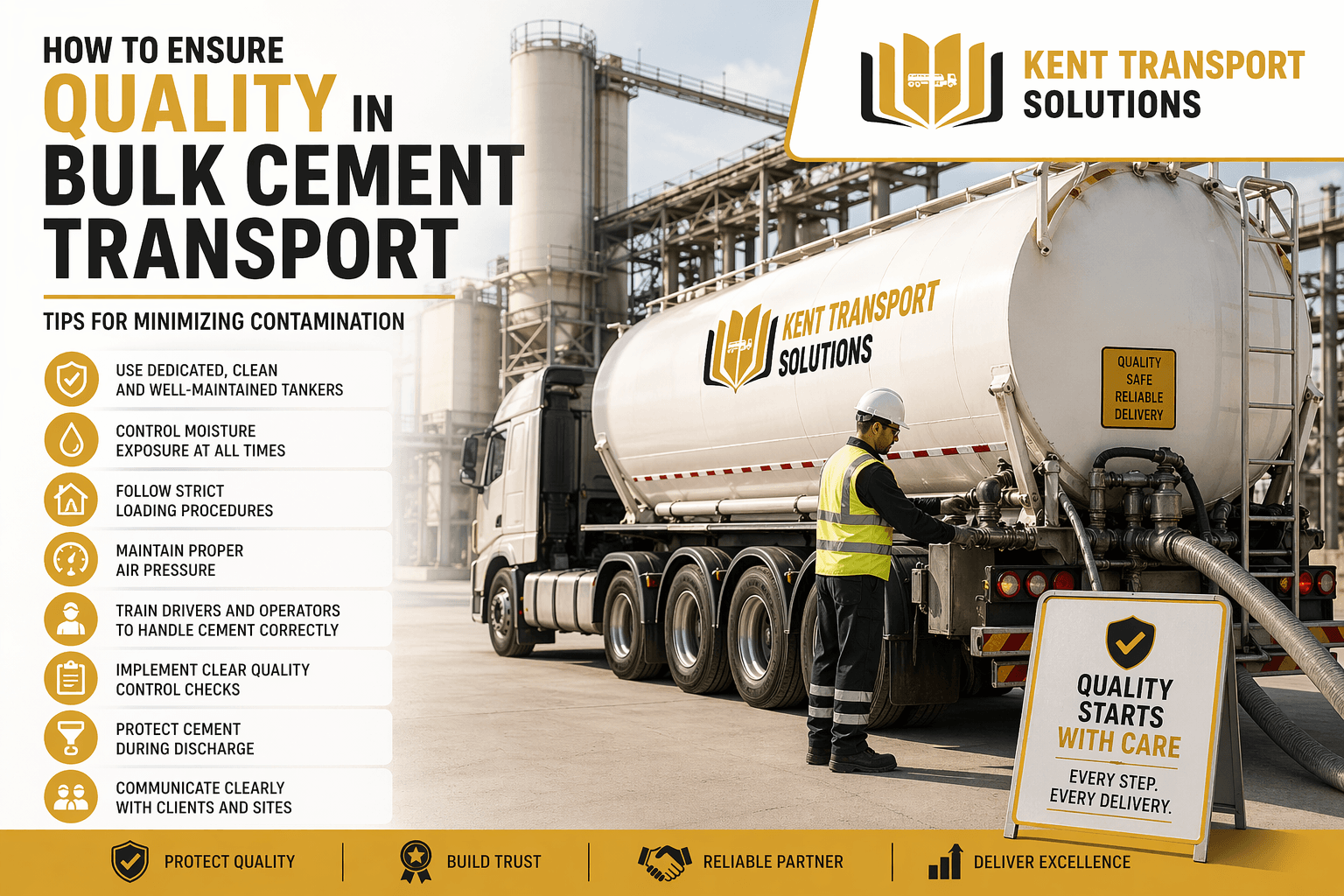
1. Use Dedicated and Well-Maintained Tankers
Your tanker is the first line of defence against contamination.
Bulk cement must be transported in tankers designed for dry powder materials. Using shared or poorly maintained equipment increases the risk of foreign material mixing with the cement.
Focus on these actions:
- Use dedicated cement tankers where possible
- Clean tankers thoroughly before each load if switching materials
- Inspect seals, valves, and pipework for wear or leaks
- Schedule routine maintenance checks for the entire fleet
Even small residues from previous loads can compromise cement quality. A strict cleaning and inspection routine prevents this.
2. Control Moisture Exposure at All Times
Cement reacts quickly with moisture. Once exposed, it begins to hydrate and loses its effectiveness.
You need to remove every possible point of moisture entry.
Key steps include:
- Ensure all hatches and seals are airtight before transport
- Check for condensation inside tankers before loading
- Avoid loading during heavy rain without proper cover
- Store tankers in dry conditions when not in use
Drivers and operators should treat moisture as a constant risk, not an occasional issue.
3. Follow Strict Loading Procedures
Contamination often starts at the loading point. If your process lacks control, quality drops before the journey even begins.
Set clear loading standards:
- Verify tanker cleanliness before loading
- Confirm the correct cement type for each delivery
- Use sealed loading systems to prevent airborne contaminants
- Avoid overfilling, which leads to pressure and discharge issues
Train your team to follow the same process every time. Consistency reduces mistakes.
4. Maintain Proper Air Pressure During Transport
Bulk cement relies on air pressure for discharge. Poor pressure control leads to blockages, uneven flow, and potential contamination from backflow.
Focus on:
- Keeping compressors in good working condition
- Monitoring pressure levels during discharge
- Avoiding sudden pressure changes that disturb the material
Well-managed pressure systems protect both the product and the equipment.
5. Train Drivers and Operators to Handle Cement Correctly
Your team plays a direct role in quality control.
Drivers who understand the risks of contamination make better decisions on the road and on site.
Training should cover:
- Pre-trip inspection routines
- Safe loading and discharge procedures
- Identifying signs of contamination or moisture
- Emergency response if issues arise during transport
Regular training keeps standards high and reduces human error.
6. Implement Clear Quality Control Checks
You need systems that catch problems early.
Introduce checkpoints across the transport process:
- Pre-loading inspection checklists
- Mid-journey checks for seal integrity
- Post-delivery inspections and feedback from clients
Document these checks. Tracking patterns helps you fix recurring issues quickly.
7. Protect Cement During Discharge
The final stage carries as much risk as the first.
Improper discharge exposes cement to air, moisture, and foreign particles.
Best practices include:
- Ensuring discharge lines are clean and secure
- Using dust control systems to reduce airborne contamination
- Monitoring the flow to prevent blockages or residue build-up
A controlled discharge protects the quality delivered to the customer.
8. Communicate Clearly with Clients and Sites
Quality does not depend on transport alone. The receiving site also plays a role.
Work closely with clients to ensure:
- Storage facilities are clean and dry
- Discharge points are ready before arrival
- Site teams follow proper handling procedures
Clear communication reduces delays and protects the product after delivery.
Final Thought
Quality in bulk cement transport comes from discipline, not chance. Every stage matters, from tanker preparation to final discharge.
When you invest in proper equipment, train your team, and follow consistent procedures, you reduce contamination risks and deliver a product your clients trust.
If you want long-term reliability in your operations, focus on doing the basics well every single time.