

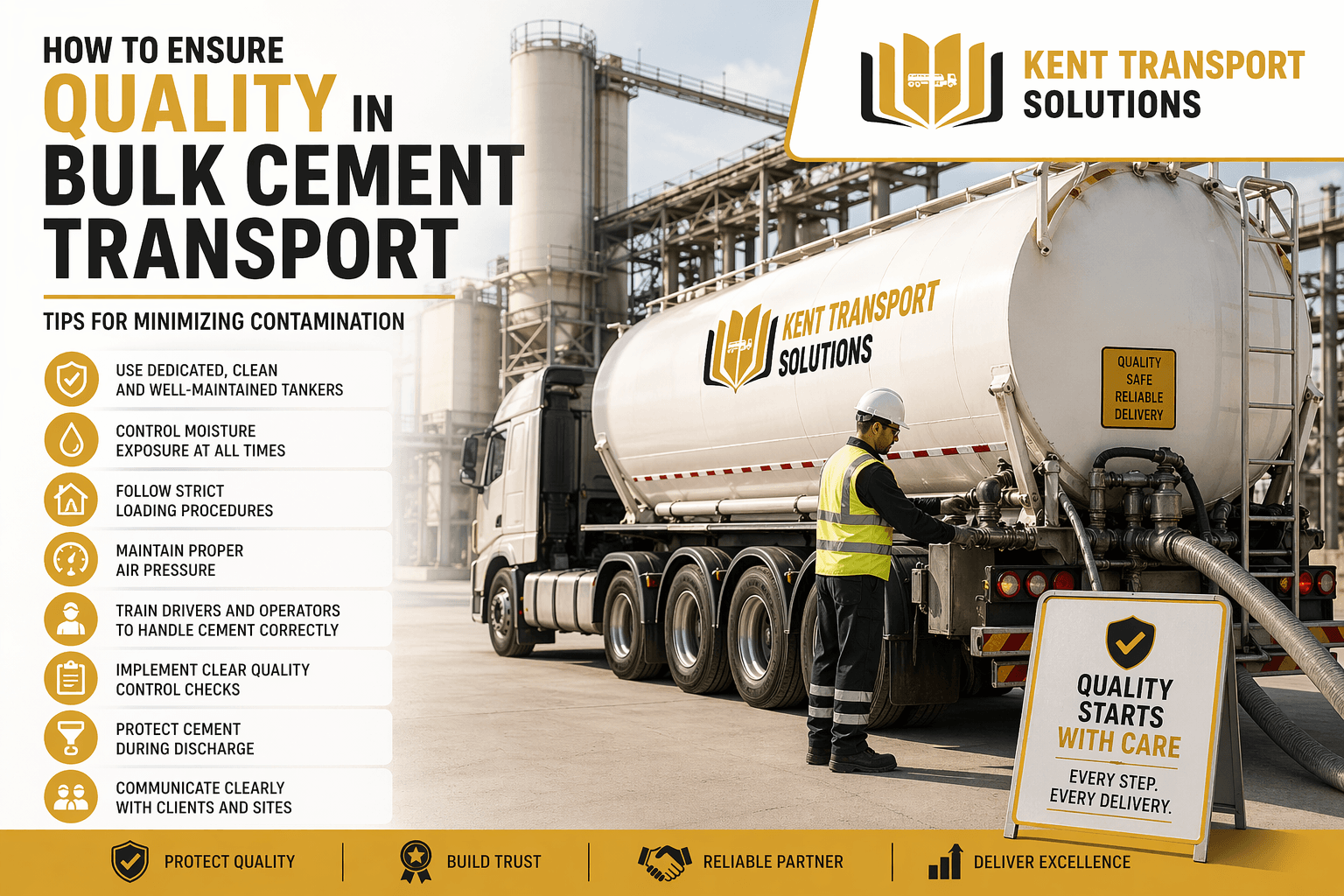
Health and safety in bulk powder transport is not a box-ticking exercise. It protects your drivers, your equipment, your clients, and your reputation. In this sector, small mistakes lead to serious consequences such as respiratory risks, pressure incidents, spills, and costly delays.
If you want a safe and reliable operation, you need clear systems, trained people, and consistent checks at every stage.
Here is what you need to get right.
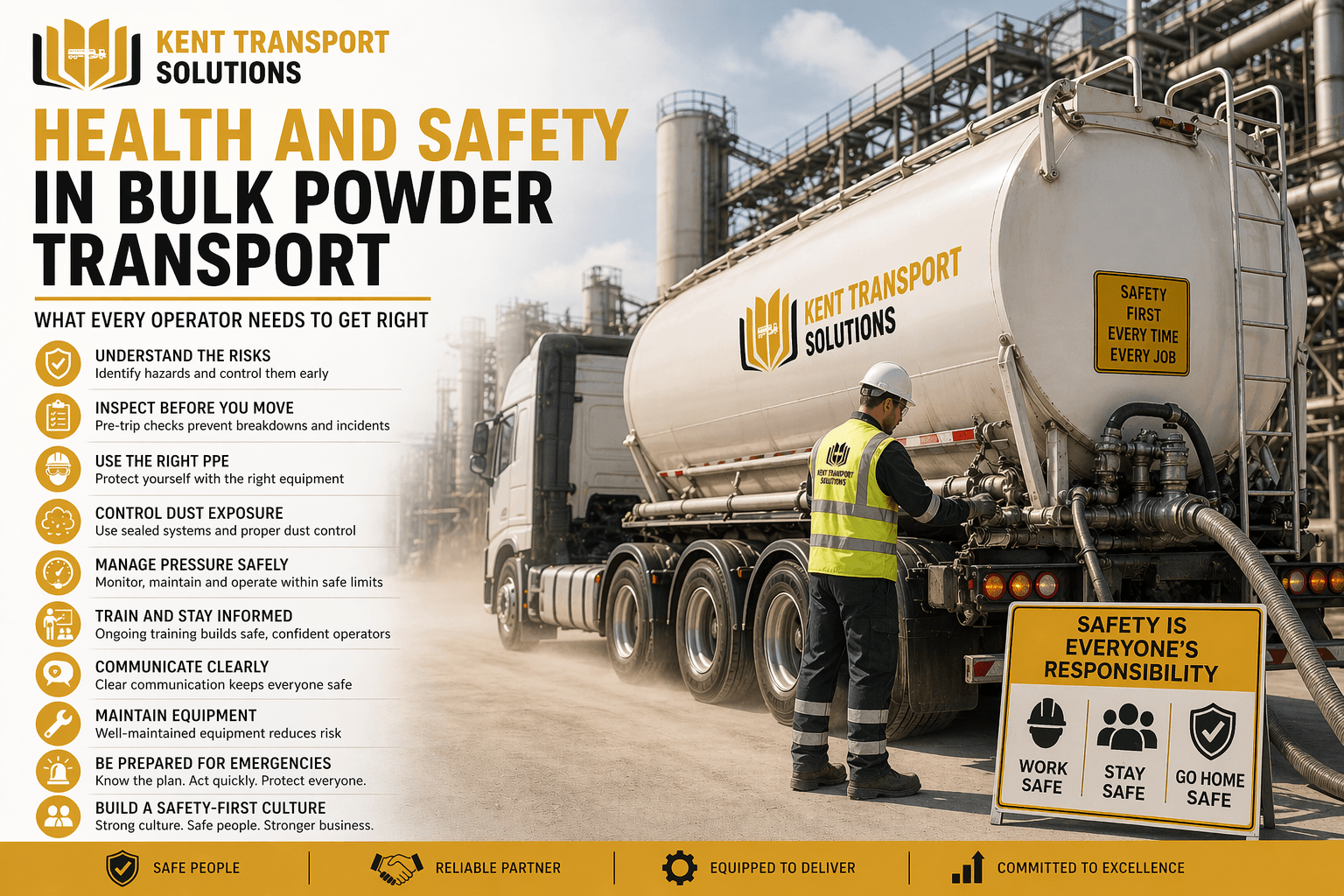
Understand the Risks Before You Move
Bulk powders such as cement create specific hazards. You need to recognise them before you manage them.
Key risks include:
- Dust inhalation, which affects respiratory health
- High-pressure discharge systems that lead to injury if mismanaged
- Vehicle instability due to shifting loads
- Slips, trips, and falls during loading and unloading
- Equipment failure from poor maintenance
When your team understands these risks, they make better decisions on the ground.
Carry Out Pre-Trip Inspections Every Time
A safe journey starts before the vehicle moves.
Drivers should complete a structured inspection before every trip. This reduces the risk of breakdowns and incidents during transport.
Focus on:
- Checking tanker integrity, valves, and seals
- Inspecting tyres, brakes, and lights
- Confirming pressure systems are working correctly
- Ensuring all safety equipment is present and in good condition
Skipping this step leads to avoidable problems. Consistency is what keeps your fleet safe.
Use the Right Personal Protective Equipment
Personal protective equipment protects your team from direct exposure to hazards.
Operators and drivers should always have access to:
- Dust masks or respirators
- Safety goggles
- Gloves
- High-visibility clothing
- Safety boots
PPE only works when people use it correctly. You need to enforce standards, not suggest them.
Control Dust Exposure at All Stages
Dust is one of the biggest risks in bulk powder transport.
Poor dust control affects both health and the surrounding environment.
You reduce exposure by:
- Using sealed loading and discharge systems
- Checking connections before starting discharge
- Avoiding leaks in hoses and pipework
- Using dust suppression systems where needed
Clean working environments protect both your team and your reputation.
Manage Pressure Systems Safely
Bulk cement transport relies on pressurised systems. These systems require careful handling.
Incorrect pressure levels or faulty equipment lead to serious incidents.
You need to:
- Train operators on safe pressure limits
- Monitor pressure during discharge
- Maintain compressors and valves regularly
- Release pressure safely before disconnecting equipment
Pressure systems require discipline and attention at all times.
Provide Ongoing Training for Drivers and Operators
Training is one of the strongest safety controls you have.
Drivers should not rely on basic knowledge alone. Regular updates keep them sharp and aware of current best practices.
Training should include:
- Safe loading and discharge procedures
- Emergency response actions
- Equipment handling and fault identification
- Site safety protocols
Well-trained drivers reduce risks, protect assets, and improve overall performance.
Maintain Clear Communication on Every Job
Miscommunication leads to mistakes. In bulk transport, mistakes cost time and create safety risks.
Ensure clear communication between:
- Drivers and site operators
- Dispatch teams and drivers
- Maintenance teams and operations
Before any delivery, confirm:
- Site readiness
- Safe access points
- Discharge procedures
Clarity prevents confusion and reduces delays.
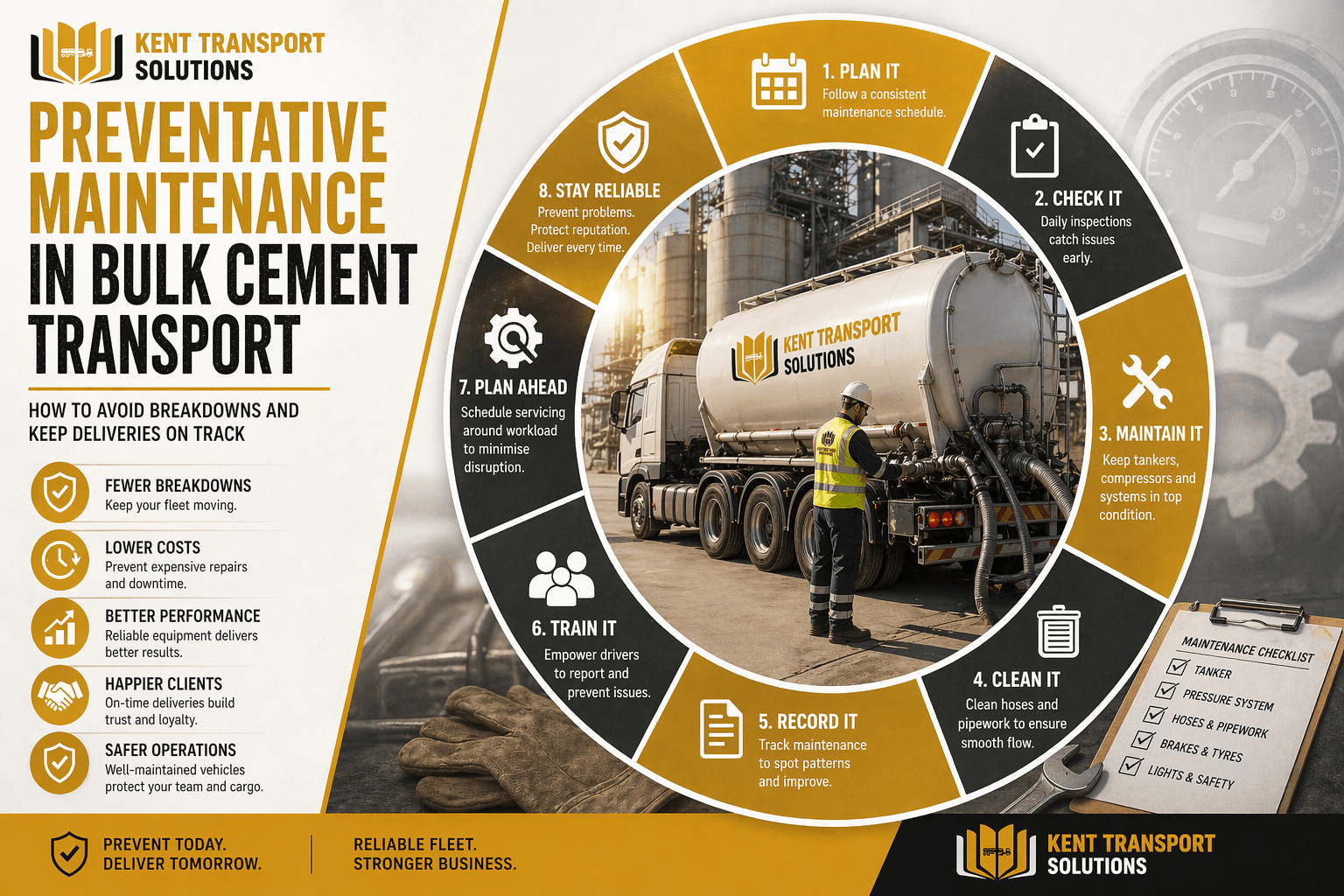
Keep Equipment in Top Condition
Your equipment supports every part of your operation. Poor maintenance increases the risk of failure.
You need a structured maintenance plan that includes:
- Routine servicing of tankers and compressors
- Immediate repairs when faults are identified
- Regular inspections of hoses, valves, and seals
Reliable equipment supports safe operations. Neglected equipment creates risk.
Have Clear Emergency Procedures in Place
Even with strong systems, issues still occur. What matters is how your team responds.
Every operator should know what to do in situations such as:
- Equipment failure during discharge
- Pressure-related incidents
- Spills or leaks
- Driver health emergencies
Clear procedures reduce panic and help your team act quickly and safely.
Build a Safety-First Culture
Safety improves when it becomes part of daily behaviour.
You build this culture by:
- Setting clear expectations
- Leading by example
- Holding everyone accountable
- Encouraging reporting of risks and near misses
When safety becomes routine, performance improves across your entire operation.
Final Thought
Health and safety in bulk powder transport comes down to discipline, training, and consistency. Every stage matters, from inspection to final discharge.
When you focus on the details, enforce standards, and support your team, you reduce risks and build a stronger, more reliable operation.
If you want long-term success in this industry, you need to treat safety as a core part of how you operate every single day.