




A practical guide for HGV operators, fleet owners and transport managers in the UK
A Traffic Commissioner has asked you for an independent compliance audit. Or you simply want to check your systems before anyone else does. Either way, the same questions come up: what will the auditor look at, and is your paperwork ready?
An operator compliance audit looks at whether your systems for vehicles, drivers and records work in practice, not just on paper.
This guide explains what an audit involves, what to prepare and what to do with the findings.
What Is an HGV Operator Compliance Audit?
An operator compliance audit is an independent review of your transport business’s systems and procedures. It checks whether you have the right arrangements to run vehicles and drivers safely and legally, and whether you follow them day to day.
For example, you might have a written vehicle maintenance policy. An audit checks whether your business actually follows it and keeps the evidence to prove it.
The Traffic Commissioners for Great Britain publish official guidance on what an acceptable audit should cover. It was last updated on 14 August 2026. Key points include:
- Audits should be carried out by people or organisations independent of the operator.
- They should generally take place in person at your premises, although some parts may be done remotely.
- Auditors check samples of vehicle, trailer and driver records, and maintenance records should cover at least four scheduled inspections.
- Where evidence isn’t available, the auditor should say so in the report.
- A Traffic Commissioner can reject an audit that isn’t good enough.
Why Audits Matter
An audit helps you spot weaknesses before they turn into operational or regulatory problems. It can help you:
- Find gaps in your compliance procedures.
- Improve how you manage vehicle maintenance and drivers.
- Check the quality of your transport records.
- Strengthen communication between management and drivers.
An audit doesn’t guarantee compliance or prevent regulatory action. As the operator, you remain responsible for keeping effective systems in place and putting right any shortcomings.
1. Review Your Operator Licence
Start by checking that your licence details are accurate. Review:
- The vehicles authorised under the licence.
- The operating centres listed.
- The maintenance arrangements were recorded.
- Your licence conditions and undertakings.
- The details of directors and relevant company representatives.
If you hold more than one licence, confirm which licence and operating centre the audit covers.
2. Prepare Your Vehicle Maintenance Records
Maintenance is one of the most important areas of any audit. Your records should give clear evidence of the work carried out, including:
- Planned maintenance schedules.
- Safety inspection reports.
- Driver defect reports.
- Repairs and corrective work.
- Vehicle off-road records.
- MOT and other testing information.
- Maintenance contracts and provider details.
Check that your inspection schedule suits your fleet and matches what your operator licence says. If you use an external maintenance provider, confirm that the arrangement and the provider’s details are up to date.
3. Check Your Driver Management Procedures
An auditor will want to see how you check, train and monitor your drivers. Expect them to look at:
- Driving licence checks.
- Driver Qualification Card (DQC) records.
- Training and induction records.
- Contracts and employment arrangements.
- Medical and eyesight requirements.
- Defect reporting procedures.
Don’t forget agency drivers. They need the same checks, and they need to understand the standards you expect.
4. Review Drivers’ Hours and Tachograph Records
You need a reliable system for downloading, analysing and acting on tachograph data. Before an audit, check you have:
- Driver card download records.
- Vehicle unit download records.
- Tachograph analysis reports.
- Drivers’ hours infringement reports.
- Working Time records.
- Evidence of the action taken when infringements occur.
An infringement report on its own isn’t enough. You also need to show how you reviewed the issue, spoke to the driver and took action. Keep a record of every step.
5. Check Your Transport Manager’s Role
If you hold a standard goods vehicle operator licence, your qualified transport manager must exercise continuous and effective management of the transport operation. They need enough time, authority and access to information to do the job properly.
An auditor may review:
- Their qualifications and continuing professional development.
- Their contract or employment arrangements.
- Evidence of their involvement in day-to-day operations.
- Their oversight of maintenance and drivers.
- Records of compliance reviews.
If you use an external transport manager, keep clear evidence of the arrangement and how involved they are in running the operation.
6. Organise Your Documents
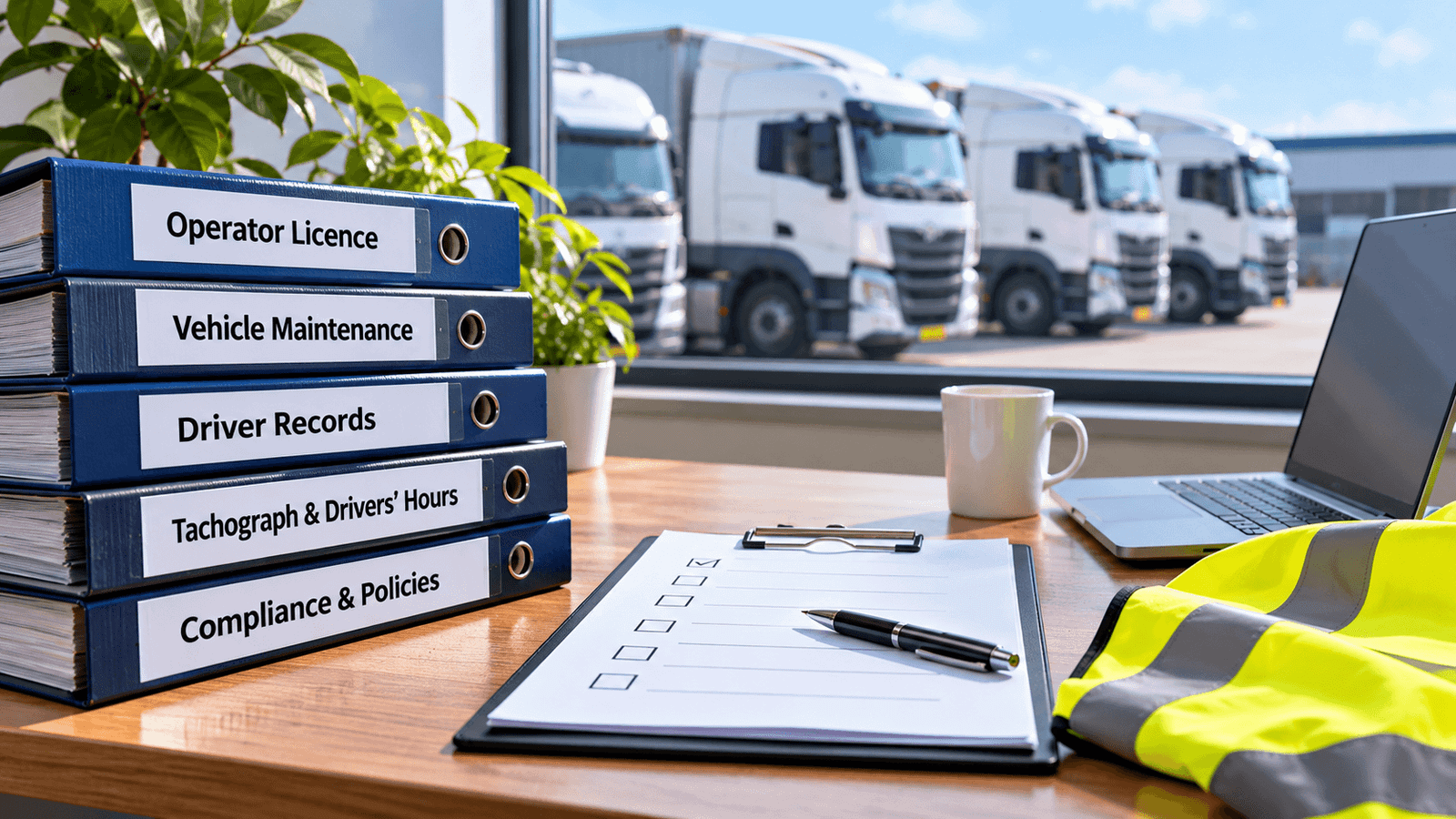
A well-organised filing system makes the audit quicker and shows you’re in control. Keep separate folders for:
- Operator licence information.
- Vehicle maintenance.
- Driver records.
- Tachograph and drivers’ hours.
- Transport manager documentation.
- Insurance and vehicle arrangements.
- Policies and procedures.
- Previous audit reports and corrective actions.
Electronic records are fine, as long as they’re complete, readable and easy to find.
Don’t rely on verbal explanations. The guidance makes clear that auditors should record where evidence is missing, and saying you “told the driver” carries little weight without a written record.
7. Choose an Independent Auditor
The guidance is clear that audits should be carried out by people or organisations independent of your business. The auditor must be free to report accurately without pressure, and their fee shouldn’t depend on the outcome.
If an organisation offers both compliance advice and audits, the two services should be provided by separate parts of the business. The same person shouldn’t advise you and then audit you.
When choosing an auditor, look for:
- Relevant transport industry experience.
- Knowledge of operator licensing requirements.
- Audit qualifications and ongoing professional development.
- A clear, independent audit process.
- A high-quality, detailed final report.
Remember, a Traffic Commissioner can reject an audit that isn’t good enough. Choosing the right auditor protects your time, your money and your licence.
8. What to Do After the Audit
The report is only useful if you act on it. Once you receive it:
- Review each finding carefully.
- Identify the cause of any weakness.
- Assign someone to own each corrective action.
- Set realistic completion dates.
- Update your policies and procedures.
- Keep evidence of the changes you’ve made.
- Check progress until every action is complete.
For example, if the audit finds gaps in driving licence checks, don’t just carry out the missing checks. Fix the process behind them, so it doesn’t happen again, and keep records of future checks.
Audit Preparation Checklist
Use this checklist to review your business before an audit:
- Operator licence details are accurate.
- Vehicle and operating centre information is up to date.
- Maintenance schedules are current.
- Safety inspection and repair records are available.
- Driver licence and qualification records are complete.
- Tachograph downloads and analysis reports are available.
- Drivers’ hours infringements have been reviewed and acted on.
- Transport manager responsibilities are documented.
- Policies and procedures are up to date.
- Previous audit findings have been addressed and recorded.
Frequently Asked Questions
Who can carry out an operator compliance audit?
Someone independent of your business, with the right transport knowledge and experience. If an organisation offers both advice and audits, the two services should be kept separate.
Can a Traffic Commissioner reject an audit?
Yes. The guidance isn’t a legal test, and it’s up to you to make sure your audit is good enough. A Traffic Commissioner can reject one that falls short.
Do audits happen at our premises?
Generally, yes. The guidance says audits should usually take place in person at the operator’s premises, although some parts may be done remotely.
Make Compliance a Habit, Not a Panic
The best way to prepare for an audit is to stay prepared all year round. Review your procedures regularly, keep your records accurate and make sure everyone understands their responsibilities.
At Colwell Transport Solutions, we help operators, fleet owners and transport managers build compliance systems that work in practice.
Need support with your transport compliance?
Contact Kentbulk Powder Ltd to talk about your transport consultancy and training needs.
Further Reading
- Traffic Commissioners for Great Britain, Operator Compliance Audits: https://www.gov.uk/government/publications/operator-compliance-audits/operator-compliance-audits
- GOV.UK, Goods Vehicle Operator Licensing Guide: https://www.gov.uk/guidance/goods-vehicle-operator-licensing-guide