


Introduction
Proper documentation in bulk cement transport means recording the right details at the right time, from booking and loading to delivery and sign off. This includes the load manifest, batch and product details, weights, tanker ID, delivery location, silo number, arrival and discharge times, and proof of delivery. When these details are clear and consistent, everyone involved, dispatch, driver, and site team, works from the same information and avoids preventable errors.
Paperwork affects safety because it confirms site rules, discharge requirements, and checks needed before offload, which reduces risk during high pressure pneumatic discharge. It protects quality because it supports traceability, shows what was loaded, where it went, and helps investigate issues such as contamination, moisture exposure, or discharge faults. It supports compliance by providing an audit trail for customers, operators, and regulators. It also protects payment because accurate proof of delivery, time stamps, and signed receipts reduce disputes, speed up invoice approval, and keep cash flow steady.
What Documents Matter in Bulk Cement Deliveries
The most reliable operations use a standard set of documents on every load, so no one has to guess what is being delivered, where it should go, or how it should be handled. Start with the delivery order and booking confirmation, which should include the site address, delivery slot, contact details, access notes, and the correct silo reference. The load manifest should clearly show the product name, quantity, batch or reference numbers, loading time, and the loading location, so the site team can verify what arrived and match it to their records. Proof of delivery, often a delivery receipt signed on site, should capture arrival time, discharge start and finish times, the receiving silo, and any comments about delays or issues. Where used, include weighbridge tickets to support the loaded and delivered weight. Add tanker cleaning records and suitability checks, especially when the tanker is not dedicated, so you show the tank was clean, dry, and fit for cement. On some sites, you also need permits or induction confirmation, because missing these can stop the driver at the gate and create hours of avoidable waiting.
How Documentation Prevents the Most Common Delivery Problems
Good documentation stops errors before they happen, because it removes guesswork at the handover points. Clear product names, batch references, and silo numbers reduce the risk of blowing into the wrong silo, which is one of the most expensive mistakes on a site. Accurate quantities, weights, and time stamps reduce disputes about short loads, part loads, or overfills, and they help the site plan labour and space around the delivery. Booking references, access notes, and named contacts prevent gate delays and missed slots, because security and site teams can verify the delivery fast. When a site questions quality, traceable batch details, tanker ID, and recorded checks help you investigate quickly and prove what was loaded and delivered. Completed proof of delivery, with signatures and recorded discharge times, also reduces payment delays, because invoice teams have the evidence they need to approve and process payments without back and forth.
Documentation and Quality Control
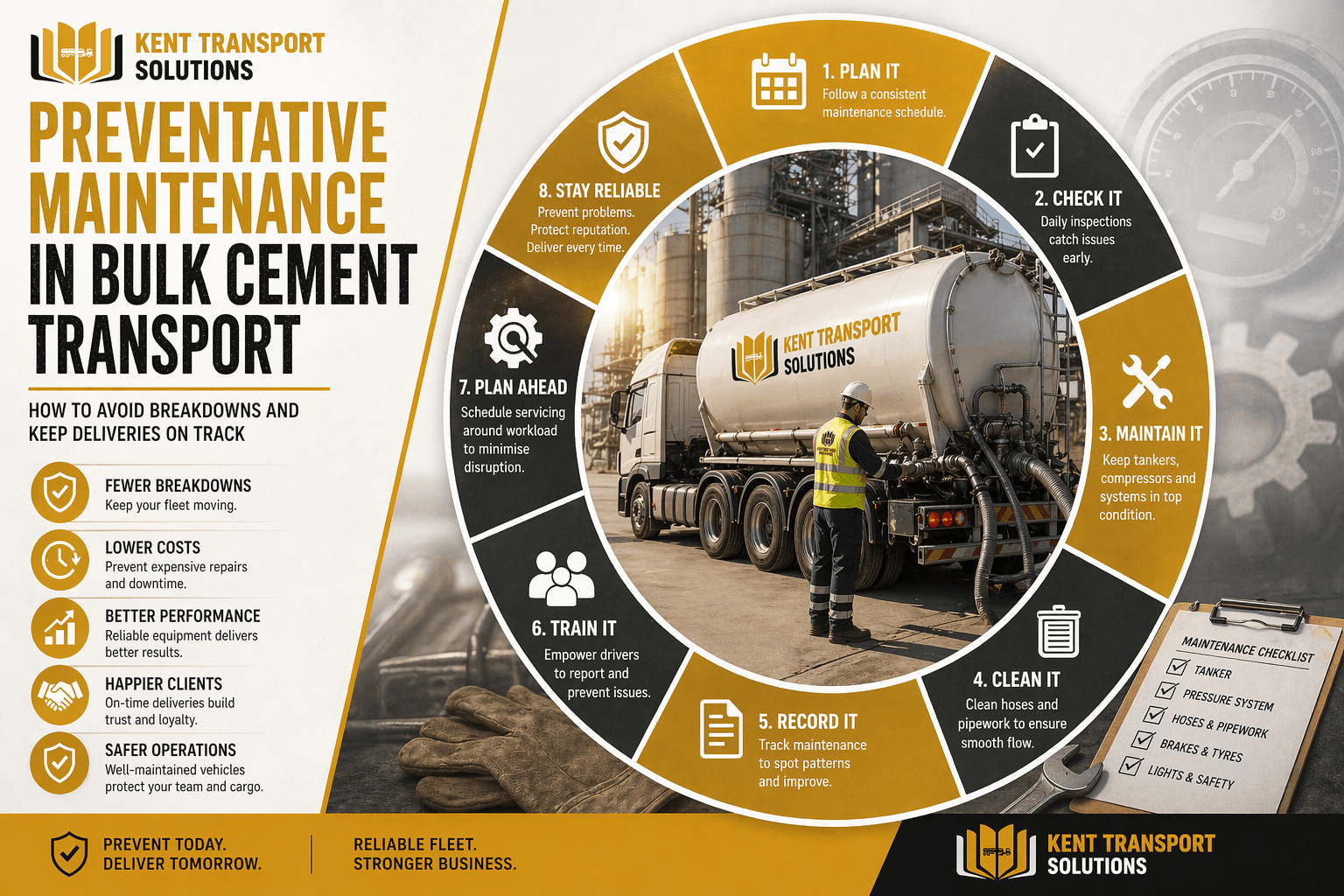
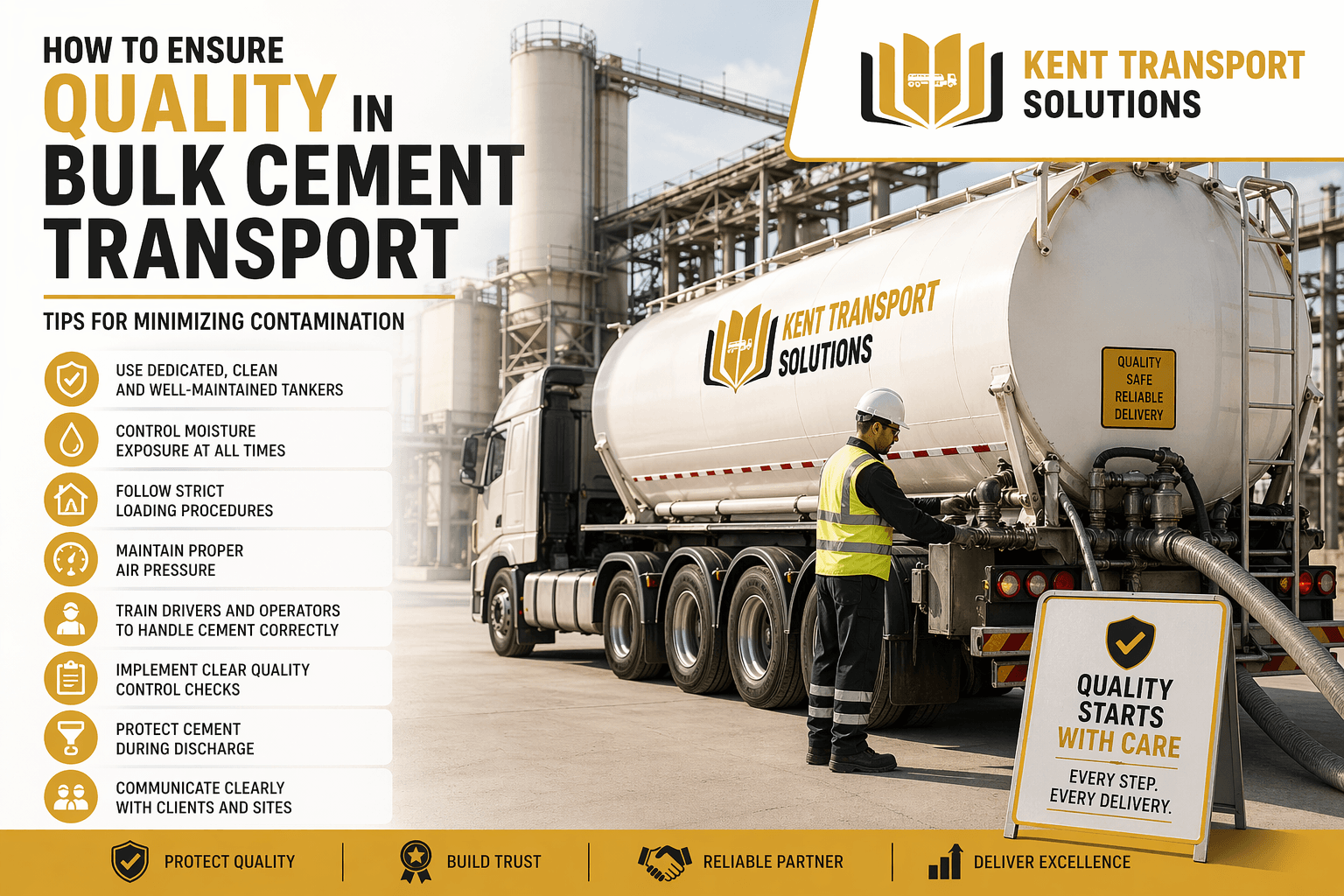
Documentation supports quality control by giving you full traceability from plant to site. Record the product type, batch or reference number, loaded quantity, loading time, and the loading point, then link these details to the tanker ID and the driver name so you can trace who handled the load at each stage. Add pre load checks such as tank dryness, seal condition, hose condition, and confirmation that the tanker is fit for cement, especially if the tanker carries other products. During delivery, record arrival time, waiting time, discharge start and finish times, and any pressure or flow issues, because these details help you identify what caused problems like slow discharge, filter alarms, blow backs, or blockages. If delays happen in rain or high humidity, note weather exposure and how long the vehicle waited, because this supports investigations where moisture and caking become concerns. When you log these details consistently, you spot patterns, improve processes, and resolve quality complaints faster with clear evidence.
Documentation and Safety Compliance
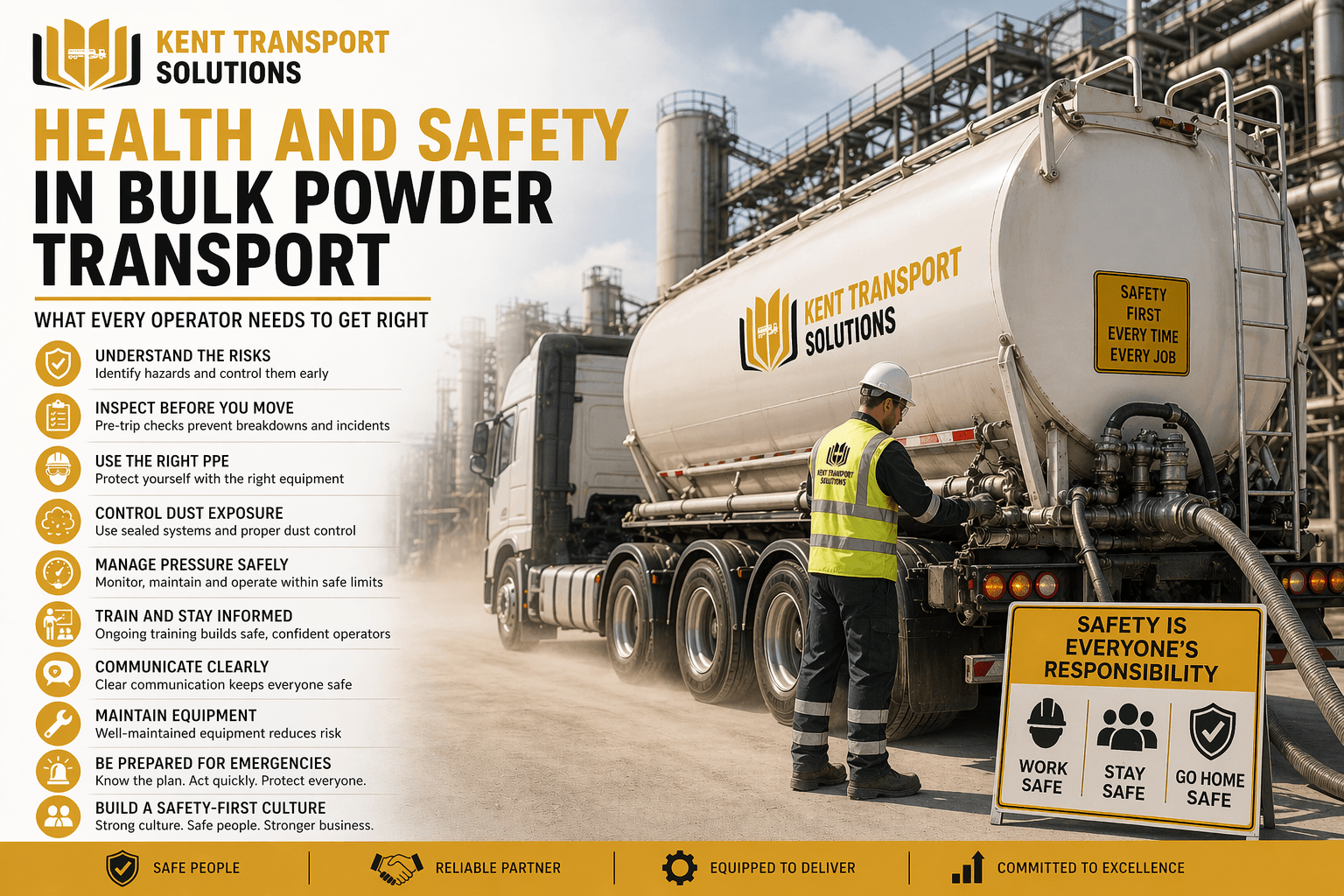
Bulk cement delivery involves pressurised systems, moving vehicles, and dust risks, so safety depends on clear, recorded steps. Documentation should confirm the driver has the correct site instructions, PPE requirements, and any induction or permit needed to enter and unload. It should also capture the key discharge details that protect people and equipment, such as the correct silo identification, confirmation that the receiving system is ready, and any site specific limits on discharge pressure or flow. Drivers should record any issues during offload, such as damaged filters, pressure relief valve concerns, blocked lines, hose faults, or dust escape, because these can signal an unsafe setup that needs attention before the next delivery. If an incident or near-miss happens, a clear report with time stamps, location, what happened, and what actions were taken helps you meet internal policies, support investigations, and reduce repeat risk. Consistent safety records also support audits and show clients that your operation takes compliance seriously.
Best Practice Workflow, From Booking to Close Out
A simple workflow keeps documentation consistent and prevents missing details under pressure. Start at booking by capturing the essentials in one place, site address, delivery slot, named contact, access instructions, product type, quantity, and the correct receiving silo. Before dispatch, prepare a clear driver pack, whether digital or printed, with the booking reference, site rules, discharge requirements, and the load manifest details so the driver arrives fully informed. On arrival, confirm the site contact, verify the silo label and capacity, and record any waiting time or changes to the plan before discharge starts. During offload, record discharge start and finish times, any pressure or flow issues, and any site problems that affect safe unloading. After discharge, complete proof of delivery on site, including signatures, time stamps, comments, and any supporting photos where needed, then close out the job by uploading documents, logging issues, and filing records under a consistent reference so the office team can invoice quickly and the operation team can review performance.
Go Digital Without Losing Control
Digital documentation improves speed and accuracy when you use a consistent process. Electronic proof of delivery helps capture signatures, time stamps, and location details, and photo capture helps support notes such as damaged filters, silo label confirmation, hose setup, or access issues. Keep control by using standard templates for manifests, delivery receipts, and issue reporting, so drivers and dispatch teams record the same fields every time. Use consistent naming, such as date, site name, load reference, and tanker ID, so files stay easy to search during audits or disputes. Set clear rules for when to upload, such as immediately after delivery or by end of shift, and assign ownership so documents do not sit on phones or get lost. When you combine digital tools with clear standards, you reduce paperwork errors, speed up invoicing, and keep records audit ready without adding admin burden.
Simple Documentation Checklist for Every Bulk Cement Load
Use this checklist to keep every delivery consistent and reduce delays, disputes, and compliance gaps. Before dispatch, confirm the booking reference, delivery slot, site contact, access instructions, correct product name, quantity, and receiving silo details, then make sure the driver has the load manifest and any site permit or induction requirements. At loading, record batch or reference numbers, loading time, loading location, tanker ID, and any cleaning or suitability confirmation needed for the tanker. On arrival, confirm the correct silo label, available capacity, and any site safety requirements, then record arrival time and waiting time. During discharge, record discharge start and finish times, note any pressure, flow, or filtration issues, and capture photos if needed to support the record. After offload, complete proof of delivery with signature, time stamps, comments, and supporting documents such as weighbridge tickets where used, then upload and file everything under a consistent job reference so invoicing and performance reviews stay smooth.
Conclusion:
Proper documentation keeps bulk cement deliveries smooth because it aligns dispatch, drivers, and site teams around the same facts. Clear manifests, booking details, and proof of delivery reduce wrong silo risks, cut waiting time at the gate, and shorten disputes about quantity, timing, and quality. Strong records also protect safety by confirming the correct offload process and capturing issues before they repeat. When you standardise your paperwork, or move it digital with clear rules, you speed up invoicing, improve compliance, and build trust with every delivery.