



Reliability in bulk cement delivery means the right product arrives at the right site, at the agreed time, and discharges safely into the correct silo without delay or incident. Your customer measures reliability in outcomes, on time arrival, smooth offload, clean paperwork, and no surprises that slow the job down.
When reliability drops, the impact shows fast on site. A late delivery can stall a concrete pour, leave crews waiting, and disrupt the day’s sequence of work. Offload failures, such as blocked lines, poor air supply, or silo issues, create downtime, added cost, and safety risk. Quality problems, such as moisture ingress or contamination, lead to rejected loads, rework, and complaints. Improving reliability protects your margins, reduces waste, and helps your customers keep their projects moving.
- Plan Deliveries Like a Production Schedule
Treat bulk cement delivery like a timed production job, not a quick drop. Reliability improves when dispatch plans around the site’s working rhythm, access limits, and silo readiness. Before dispatch, confirm the delivery slot, check access details such as gate hours, security rules, turning space, and restrictions, and confirm the receiving silo has enough capacity and is clearly assigned to the correct product. Build realistic lead times for known traffic hotspots, roadworks, low bridges, time restricted routes, and site rules, then share a clear arrival window with the site contact. Use contingency routes and planned dispatch times for predictable bottlenecks, and stagger vehicles where sites have limited unloading space so drivers do not queue and rush the offload. Support the process with a simple pre delivery checklist for dispatch teams, including slot confirmed, access notes shared, silo capacity confirmed, paperwork ready, route planned, and site contact verified.
2. Strengthen Communication From Booking to Offload
Reliable deliveries depend on clear communication at every stage, because small gaps create big delays on site. Set one named point of contact at the site and one in your transport team, then confirm how you will share updates, phone call, WhatsApp, or a tracking platform. Before the vehicle leaves, send the site the essentials, arrival window, access notes, discharge requirements, silo number, and any safety steps the driver must follow on arrival. During transit, share real time ETA updates so the site team can prepare the receiving area and keep the right people available for offload. If the site is running late, capture the change early so you can adjust arrival times, reroute, or hold safely without wasting hours. After offload, log key details quickly, delivery time, waiting time, discharge time, and any issues such as filter problems, pressure alarms, blocked lines, or wrong instructions, so you build a clear record and stop repeat problems from slipping through.
3. Track Performance and Fix Repeat Problems
You improve reliability when you measure what happens on every delivery and use the data to remove the biggest causes of delay and failed offloads. Track a small set of key numbers for each job, on time arrival, waiting time, discharge time, and whether the offload completed first time. When a delivery runs late or fails, record the reason using clear categories such as traffic delay, booking issue, site not ready, silo full, filter fault, compressor issue, hose problem, or access restriction. Review these results weekly, look for patterns, and focus your fixes on the top two or three repeat causes. For example, if most delays come from missed booking slots, tighten your booking confirmation steps. If most failures come from site filtration or pressure issues, add a site readiness check before dispatch and adjust discharge rates. Share the results with planners and drivers, agree simple actions, and set targets for the next week so reliability improves through consistent follow through.
4. Improve Fleet Readiness and Reduce Breakdown Risk
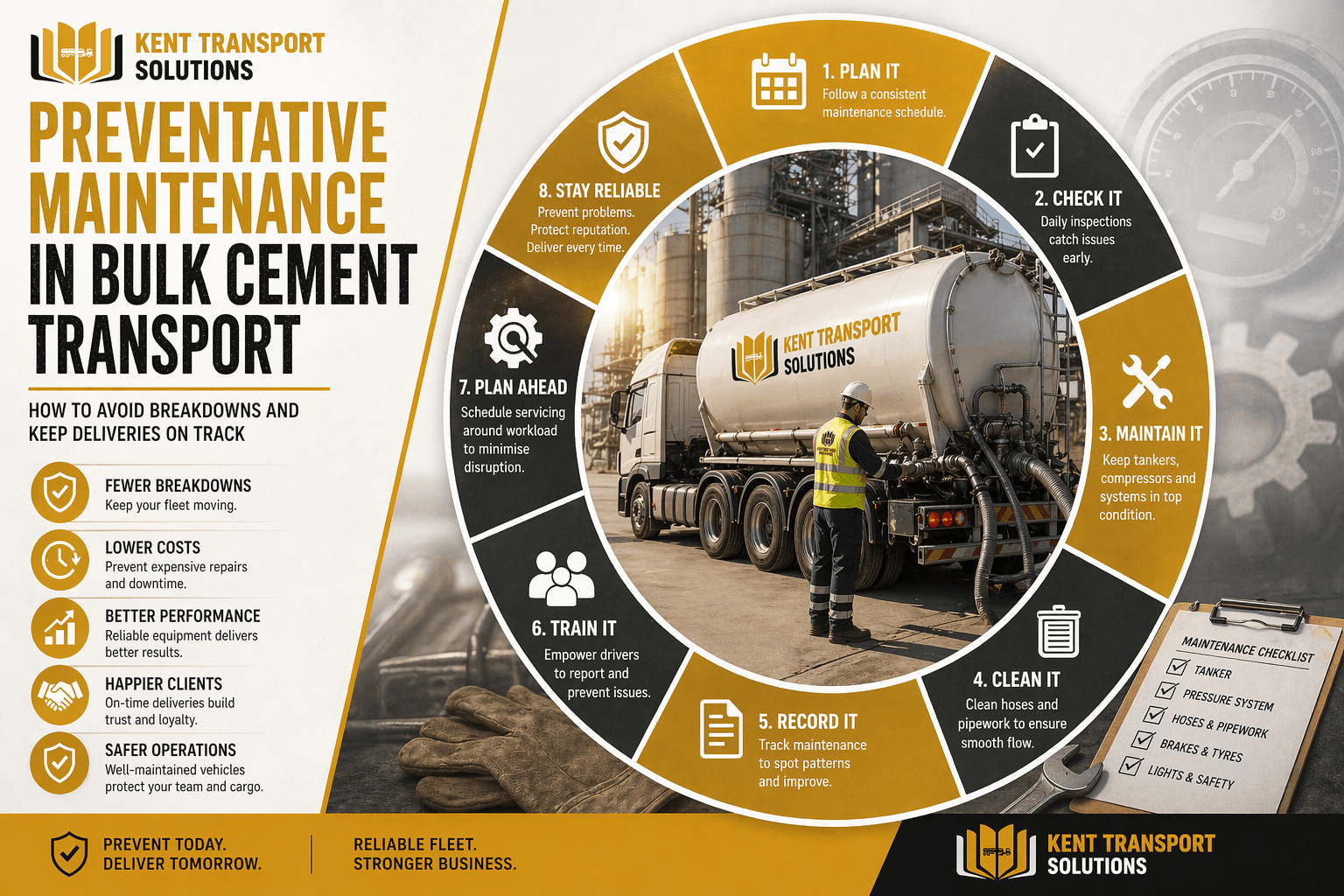
Fleet reliability drives delivery reliability, because a single defect can turn a routine job into a missed slot, a failed offload, or a safety incident. Build a planned maintenance routine that focuses on the parts that matter most for bulk cement, tank integrity, manlids and seals, valves, discharge pipework, compressors, airlines, water traps, filters, and hoses. Standardise daily walkaround checks so drivers spot issues early, such as air leaks, worn couplings, damaged hoses, loose clamps, missing caps, or moisture in the air system, then make defect reporting simple so problems get fixed before the next load. Keep key spares available for common failure points, such as seals, gaskets, hose ends, and couplings, so repairs do not depend on long waits. Train drivers on early warning signs like pressure instability, unusual compressor noise, slow discharge, and repeated filter alarms, and give them a clear escalation process so small faults do not become delivery failures.
5. Protect Product Quality During Transport and Discharge
Reliability is not only about arriving on time, it also means the cement discharges cleanly and performs as expected on site. Protect quality by keeping tanks, pipework, and hoses clean, dry, and sealed, because moisture and contamination lead to caking, blocked lines, and rejected loads. Use a dry air system with maintained water traps and correct filtration, since pneumatic discharge introduces air into the product path and any moisture in the air supply increases risk. Control discharge pressure and flow so you protect the product and the receiving silo, and match the delivery rate to the silo’s ventilation and filtration capability to reduce blow backs and dust escape. Reduce long holds and unnecessary waiting time, especially in wet weather or high humidity, because time increases exposure to conditions that trigger condensation and discharge problems. When you protect product quality this way, you reduce offload failures, avoid complaints, and deliver a more consistent service.
Conclusion:
Reliable bulk cement delivery comes from a simple system, not luck. When you plan deliveries like a production schedule, keep communication tight from booking to offload, track performance and fix repeat problems, keep the fleet fit for purpose, and protect product quality during transport and discharge, you reduce missed slots, failed offloads, and avoidable waste. Start with one improvement this week, pick the area causing the most delays or complaints, put a checklist in place, and review results after five to ten deliveries. Small process changes, repeated every day, lead to predictable deliveries and stronger customer trust.